Diego Marti Monso emphasizes the evolution of robotics through world models, focusing on the training methods that adapt to diverse applications.
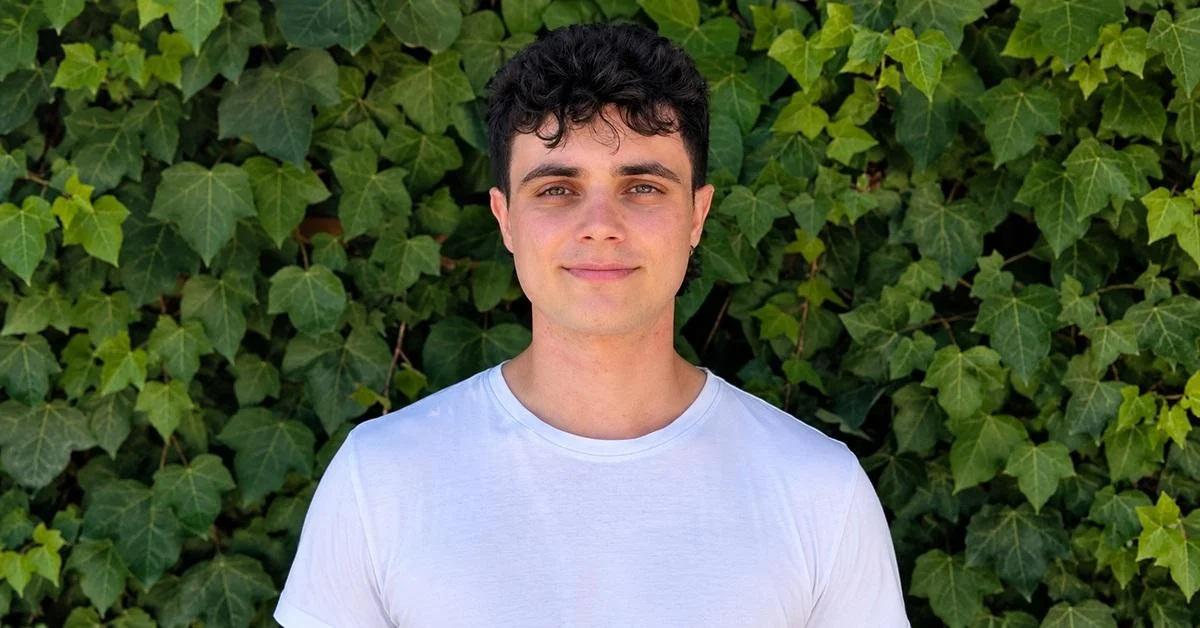
Diego Marti Monso, a researcher renowned for his impactful contributions to AI, is steering the conversation around world models—systems that analyze sensory input to predict future states. His deep dive into this area positions world models as a critical frontier for advancements in robotics, video generation, and virtual environments. Presently, however, his primary focus is on enhancing robotics capabilities, which he sees as ripe for transformation.
Marti Monso posits that generalization and the ability to transfer knowledge are vital for the success of future AI systems. While existing robotics, heavily utilized in industrial settings, serve specific purposes, he predicts that versatile systems will overtake the current narrow implementations. This perspective underscores his dedication to developing training methods that maintain their relevance across evolving applications. "I’m interested in the underlying capability of the product," he shared. "If the method can carry knowledge across different problems, it stands a better chance of remaining useful as applications change."
A Career Built in World Prediction
This philosophy led to the creation of Diffusion Forcing, a novel training methodology co-developed during his time as a visiting researcher in the Scene Representation Group at MIT’s Computer Science and Artificial Intelligence Laboratory. The approach, which was presented at NeurIPS in 2024, tackles a significant challenge in the AI domain: sustaining accuracy in predictions during long sequences. Previous models often faced substantial drift, complicating the coherence of predictions over extended periods.
Diffusion Forcing offers a unique framework that enhances the model’s ability to adapt dynamically as sequences unfold, a fundamental improvement for both video prediction and robotic tasks. Marti Monso, who co-developed the core training formulation and conducted thorough evaluations, never anticipated the profound influence of his work on the AI community.
A Method That Traveled Beyond the Original Research
The reach of Diffusion Forcing extends well beyond the confines of academic research, manifesting in commercial products and open-source endeavors. Two years post-publication, the method garnered over 600 citations and 1,200 GitHub stars, signaling its robust adoption across both industry and academia.
For instance, Skywork AI, a publicly traded company with a user base of 400 million monthly active users, has integrated Diffusion Forcing into its SkyReels-V2 framework. Similarly, Overworld's Waypoint-1, an interactive world model featured in a consumer product, is built on this methodology. Notably, leading tech entities such as Google DeepMind, OpenAI, Nvidia, and several others have either utilized or adapted the method for their projects. In academia, institutions like MIT, Stanford, and Harvard have embarked on research inspired by Diffusion Forcing.
For Marti Monso, this widespread applicability is a source of pride. "A method becomes more useful when people can apply it to problems that it wasn't specifically designed to solve," he noted, emphasizing the enduring relevance he seeks in his research. He aims to focus on concepts that continue to hold significance beyond their initial experimental context.
Shifting Paradigms in Robotics
Marti Monso's outlook highlights a shift in how robotics is approached. Current trends often combine visual input with language and robotic actions through vision-language-action models, which he acknowledges deliver results. However, he suggests this method might just be a temporary solution. He argues that a deeper understanding of physical dynamics, achieved through world-model training, will unlock future systems that can integrate knowledge from various data sources, thereby dissolving the existing boundaries among model types.
"I think the divisions between modalities will become much less important," Marti Monso remarked. He envisions a future where systems share insights across different kinds of experiences, yet he's careful to present this as a projection rather than an accomplished reality. The challenge remains, as strong performances in digital tasks have not yet seamlessly translated into the physical competencies that humans develop naturally.
Working Beneath the Application
The gap between digital capabilities and physical application drives Marti Monso's efforts in exploring world models as a means to advance robotics. His aspiration is to build a system capable of undertaking tasks it wasn't directly trained for, grounded in a generalized understanding of both physics and environmental dynamics. Such systems could dynamically adapt to fluctuating conditions—an area where traditional robotics lag.
The landscape of robotics products may shift significantly as society progresses towards broader-purpose systems. Marti Monso anticipates that both hardware and applications will evolve, making his focus on foundational methods increasingly relevant. "The application shows what a system can do right now," he said, underscoring his commitment to developing methods that expand the range of capabilities for future innovations.



Discussion
Sign in to join the discussion.